
Posterior Tibial Tendon Dysfunction with Flatfoot Deformity
Posterior tibial tendon dysfunction (PTTD) occurs when the tendon that supports the arch of the foot becomes stretched or torn, leading to progressive flatfoot deformity. It commonly affects middle-aged individuals and athletes who perform repetitive weight-bearing activities.
-
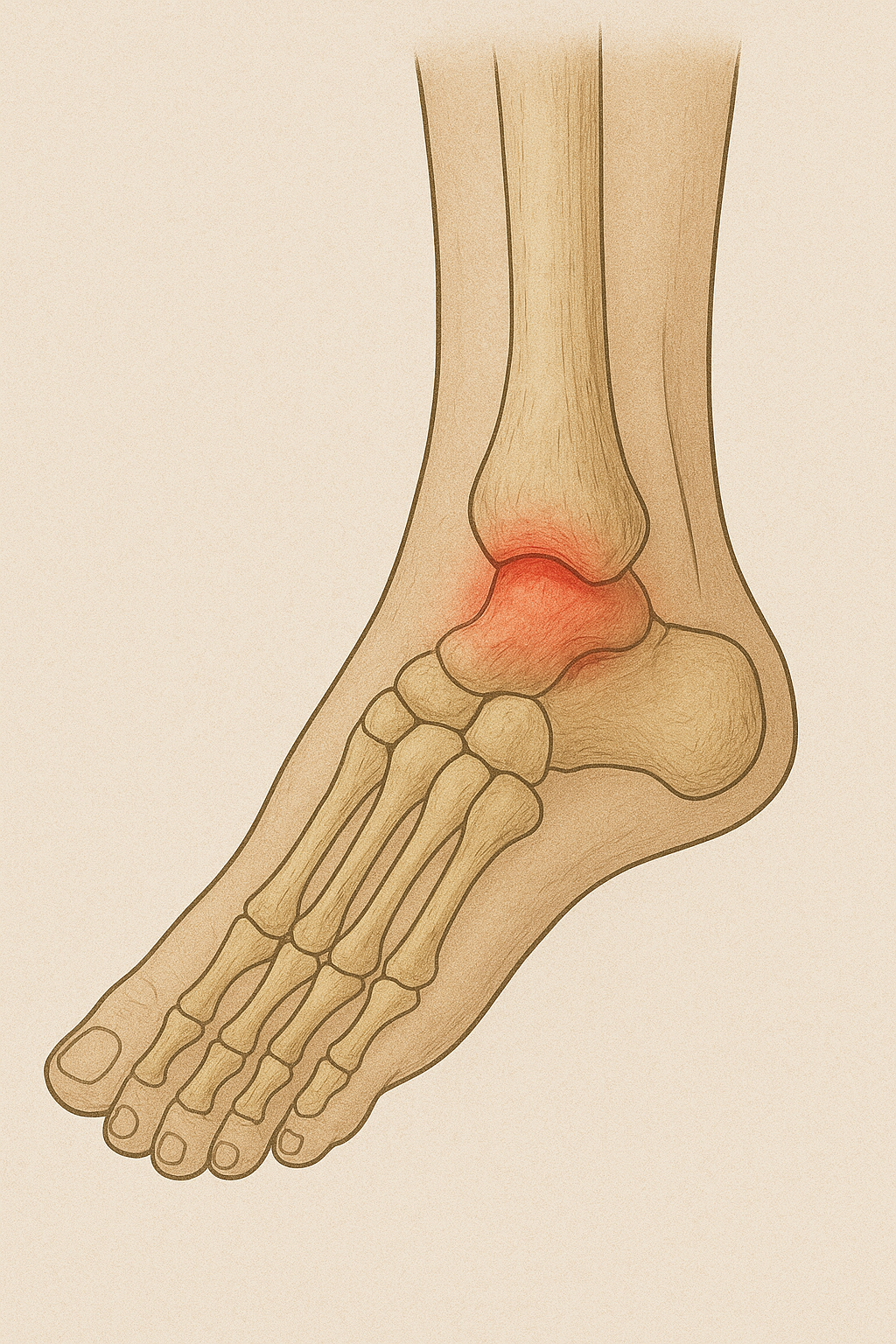
Pain and swelling along the inside of the ankle or foot
Flattening of the arch and rolling in of the ankle
Difficulty standing on tiptoes or walking long distances
-
Diagnosis is based on physical examination, gait evaluation, and imaging such as MRI or ultrasound to assess tendon integrity and deformity severity.
-
Early stages are treated with rest, orthotics, and physical therapy to strengthen the tendon and improve foot alignment. Patients may also benefit from various bracing strategies. Advanced cases may require surgical intervention, including tendon repair or transfer, and correction of the flatfoot deformity using minimally invasive or reconstructive techniques.
-
Recovery depends on severity; conservative management may improve symptoms within 3–6 months, while post-surgical recovery may take up to 6 months with structured rehabilitation.